
UK NMC CBT Practice Test 2026: 25 Free Nursing MCQs with Answers
Introduction
The UK NMC CBT (Computer Based Test) is a mandatory examination for internationally educated nurses seeking registration with the Nursing and Midwifery Council (NMC) in the United Kingdom. The exam evaluates nursing knowledge, patient safety awareness, professional accountability, communication skills, medication management, infection prevention, and evidence-based practice.
Passing the CBT is the first step toward becoming a registered nurse in the UK. Consistent practice with realistic CBT-style questions can significantly improve confidence and exam performance.
This article contains free UK NMC CBT practice questions, answers, explanations, study tips, and frequently asked questions.
What is the UK NMC CBT Exam?
The NMC CBT is part of the Test of Competence for overseas nurses.
The examination assesses:
- Professional Values
- Communication and Interpersonal Skills
- Nursing Practice and Decision Making
- Leadership, Management and Team Working
- Patient Safety
- Infection Prevention and Control
- Medication Administration
- Clinical Assessment
Why Practice CBT Questions?
Benefits include:
- Familiarity with exam format
- Improved critical thinking
- Better clinical judgment
- Faster decision-making
- Increased confidence
Many successful candidates complete hundreds or even thousands of practice questions before sitting the actual examination.
UK NMC CBT Exam Study Tips
1. Learn the NMC Code
Focus on:
- Prioritise People
- Practise Effectively
- Preserve Safety
- Promote Professionalism and Trust
2. Practice Daily
Complete at least 50–100 questions daily.
3. Focus on Patient Safety
Many CBT questions prioritize patient safety and risk reduction.
4. Understand Before Memorizing
Clinical reasoning is more important than memorization.
5. Review Incorrect Answers
Learning from mistakes improves retention.
6. Take Mock Exams
Full-length tests help improve speed and confidence.
Common UK NMC CBT Topics
Professional Issues
- NMC Code
- Consent
- Confidentiality
- Duty of Candour
- Safeguarding
Clinical Nursing
- Vital Signs
- Respiratory Care
- Diabetes Care
- Sepsis
- Cardiovascular Emergencies
Medication Safety
- Drug Administration
- Controlled Drugs
- Medication Errors
- High-Risk Medications
Infection Control
- Hand Hygiene
- PPE
- Isolation Precautions
- Healthcare Associated Infections
Mental Health
- Dementia
- Depression
- Anxiety
- Suicide Risk Assessment
- Mental Capacity
UK NMC CBT Nursing Theory Exam Practice Test: 25 Free MCQs
UK NMC CBT NURSING THEORY EXAM PRACTICE BOOK
UK NMC CBT Practice Questions
Question 1
A nurse is caring for a patient with suspected sepsis. Which action should be performed first?
A. Administer antibiotics after 6 hours
B. Escalate concerns immediately
C. Wait for laboratory confirmation
D. Reassure the patient only
Answer: B
Explanation: Early recognition and escalation are essential in sepsis management to prevent deterioration.
Question 2
Which principle is included in the NMC Code?
A. Ignore patient preferences
B. Preserve safety
C. Delegate all tasks
D. Avoid documentation
Answer: B
Explanation: Preserving safety is one of the four themes of the NMC Code.
Question 3
What is the most effective method to prevent healthcare-associated infections?
A. Gloves only
B. Hand hygiene
C. Face mask only
D. Apron only
Answer: B
Explanation: Proper hand hygiene remains the single most effective infection prevention measure.
Question 4
A patient refuses treatment despite understanding the risks. What should the nurse do?
A. Force treatment
B. Respect the decision
C. Ask family to decide
D. Ignore the refusal
Answer: B
Explanation: Competent adults have the right to refuse treatment.
Question 5
Which patient is the highest priority?
A. Stable patient awaiting discharge
B. Patient with chest pain and shortness of breath
C. Patient requesting water
D. Patient awaiting transport
Answer: B
Explanation: Airway, breathing, and circulation concerns require immediate attention.
Question 6
Which medication requires an independent double check?
A. Saline nasal spray
B. High-risk insulin
C. Moisturizer
D. Eye drops
Answer: B
Explanation: Insulin is a high-risk medication and often requires verification.
Question 7
What does informed consent require?
A. Patient understanding
B. Family approval only
C. Nurse approval
D. Physician preference
Answer: A
Explanation: Valid consent requires adequate information and understanding.
Question 8
A nurse accidentally administers the wrong medication. What should occur first?
A. Hide the incident
B. Inform the patient and senior staff
C. Alter records
D. Wait until shift change
Answer: B
Explanation: Duty of candour requires honesty and prompt reporting.
Question 9
Which sign may indicate hypoglycaemia?
A. Bradycardia
B. Sweating and confusion
C. Hypertension
D. Cyanosis
Answer: B
Explanation: Sweating, confusion, and tremors are common symptoms.
Question 10
Which assessment should be performed before administering opioids?
A. Respiratory rate
B. Hair colour
C. Shoe size
D. Marital status
Answer: A
Explanation: Opioids can cause respiratory depression.
Question 11
What is the normal adult oxygen saturation range?
A. 60–70%
B. 70–80%
C. 94–98%
D. 100% only
Answer: C
Question 12
Which patient is at highest risk of pressure ulcers?
A. Mobile young adult
B. Bed-bound elderly patient
C. Healthy athlete
D. School student
Answer: B
Question 13
Which action demonstrates patient advocacy?
A. Ignoring concerns
B. Speaking up for patient rights
C. Withholding information
D. Avoiding communication
Answer: B
Question 14
Which electrolyte imbalance can cause cardiac arrhythmias?
A. Potassium imbalance
B. Hair loss
C. Dry skin
D. Vision changes
Answer: A
Question 15
A confused elderly patient attempts to leave the ward. What should the nurse do first?
A. Assess capacity and safety
B. Lock the patient in a room
C. Ignore behaviour
D. Call security immediately
Answer: A
Question 16
Which finding indicates patient deterioration?
A. Respiratory rate 32/min
B. Pulse 72/min
C. Temperature 36.8°C
D. BP 120/80 mmHg
Answer: A
Question 17
What is the purpose of NEWS2 scoring?
A. Financial assessment
B. Early recognition of deterioration
C. Medication ordering
D. Appointment booking
Answer: B
Question 18
Which communication technique is most therapeutic?
A. Active listening
B. Interrupting frequently
C. Giving false reassurance
D. Changing topics
Answer: A
Question 19
When should patient records be documented?
A. Immediately after care
B. At the end of the week
C. When convenient
D. Only if requested
Answer: A
Question 20
Which patient requires isolation precautions?
A. Patient with active infectious diarrhoea
B. Stable fracture patient
C. Migraine patient
D. Hypertension patient
Answer: A
Question 21
What is the best indicator of adequate hydration?
A. Urine output
B. Hair growth
C. Height
D. Weight alone
Answer: A
Question 22
Which patient is most at risk of falls?
A. Independent adult
B. Elderly patient taking sedatives
C. Healthy athlete
D. Child with parent present
Answer: B
Question 23
What should a nurse do when unsure about a delegated task?
A. Perform it anyway
B. Seek clarification
C. Ignore instructions
D. Ask another patient
Answer: B
Question 24
Which action supports safeguarding?
A. Reporting suspected abuse
B. Ignoring bruises
C. Delaying documentation
D. Avoiding discussion
Answer: A
Question 25
What is the most important aspect of patient-centred care?
A. Patient involvement in decisions
B. Nurse preference
C. Hospital routine
D. Cost reduction
Answer: A
Why Practice UK NMC CBT Questions?
Regular CBT practice helps:
- Improve critical thinking
- Strengthen clinical judgment
- Identify weak areas
- Increase confidence
- Familiarize yourself with question styles
Thousands of nurses successfully pass the CBT by practicing realistic exam-style questions and reviewing detailed rationales.
Recommended Study Resource
Looking for a larger question bank?
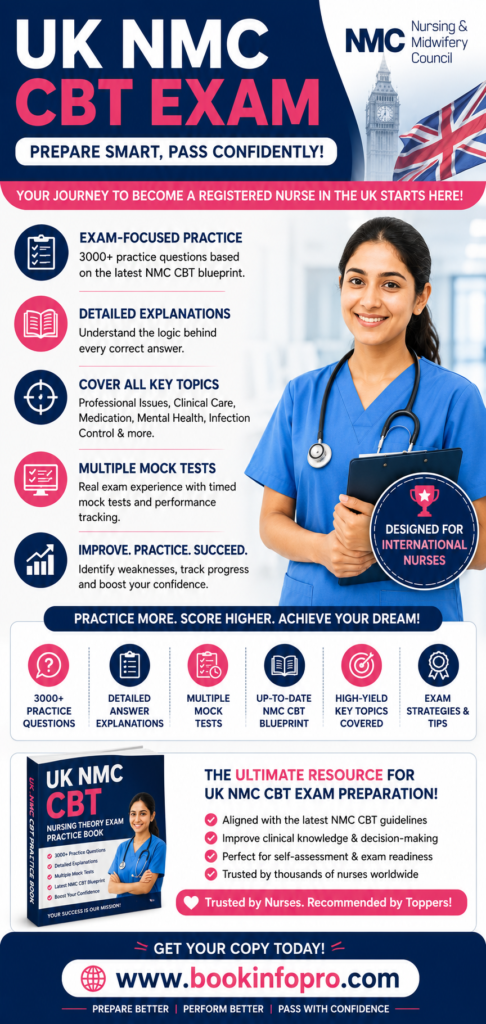
The UK NMC CBT Nursing Theory Exam Practice Book includes:
✔ 3,000+ Practice Questions
✔ Detailed Explanations
✔ Clinical Scenario-Based Questions
✔ Medication Safety Questions
✔ Professional Values & NMC Code Coverage
✔ Mock Tests
Get access here:
UK NMC CBT NURSING THEORY EXAM PRACTICE BOOK
Frequently Asked Questions (FAQs)
Is the UK NMC CBT difficult?
The CBT is considered manageable for candidates who have strong nursing knowledge and regularly practice exam-style questions.
How many questions are in the CBT?
The number of questions may vary depending on the nursing field and exam updates.
What score is required to pass?
The NMC determines passing standards based on current assessment requirements.
How long should I prepare?
Most candidates prepare for several weeks to several months depending on their experience and knowledge level.
Is the CBT based on UK nursing practice?
Yes. Questions are aligned with UK nursing standards, patient safety principles, and NMC requirements.
How to Pass the UK NMC CBT First Time
Candidates who pass on their first attempt typically:
- Follow a structured study plan
- Practice large question banks
- Focus on weak areas
- Learn clinical reasoning
- Take multiple mock tests
- Review detailed explanations
Recommended UK NMC CBT Study Resource
For candidates seeking extensive practice, consider using a comprehensive question bank that includes:
- 3000+ Practice Questions
- Scenario-Based MCQs
- Medication Safety Questions
- Professional Values Questions
- Detailed Explanations
- Full-Length Mock Tests
Study Resource:
UK NMC CBT NURSING THEORY EXAM PRACTICE BOOK
Conclusion
The UK NMC CBT exam is an important milestone for internationally educated nurses planning to work in the United Kingdom. Success requires consistent practice, understanding of UK nursing standards, and strong clinical reasoning skills.
Final Thoughts
Success in the UK NMC CBT exam requires consistent practice, understanding of clinical concepts, and familiarity with UK nursing standards. Use these free questions to test your knowledge and continue practicing regularly to improve your chances of passing on your first attempt.